Eighteen client back-offices, one chat window.
Vaxal runs development, management, and consulting for 18 e-commerce clients in parallel. Once `Fantesty Pro` was integrated with their in-house AI framework `Ryko`, the deploys, tests, fixes, and monitoring across 35 custom modules collapsed into a single chat interface.
- Client
- Vaxal · 思序網路
- Service
- Conversational AI integration
- Timeline
- 2025 Q4 – 2026 Q2
Vaxal carries three lines of work for 18 e-commerce clients in parallel — development, management, and consulting. Every client runs a different stack, peaks on a different traffic curve, and lives by a different business calendar. One team. Eighteen back-offices. Eighteen operations rhythms.
What Vaxal needed wasn't another tool. It was an abstraction layer — one that handed the environment differences to an AI, and pulled the daily ops actions scattered across Dashboards, scripts, and webhooks into a single chat interface. The platform underneath is Fantesty Pro — automation, monitoring, and load testing — integrated with Vaxal's own AI framework Ryko.
77% less deploy + test time
Total deploy and test overhead across 18 client environments cut to under a quarter of what it used to be.
90% less time to localize a bug
Kick off a stress run overnight. Next morning, a digest lands with the exact impact range.
35 client-specific modules
`MCP × 14` + `Skill × 21` — every client's environment captured as an instantly switchable capability.
10-min reproduction of connection-tier bugs
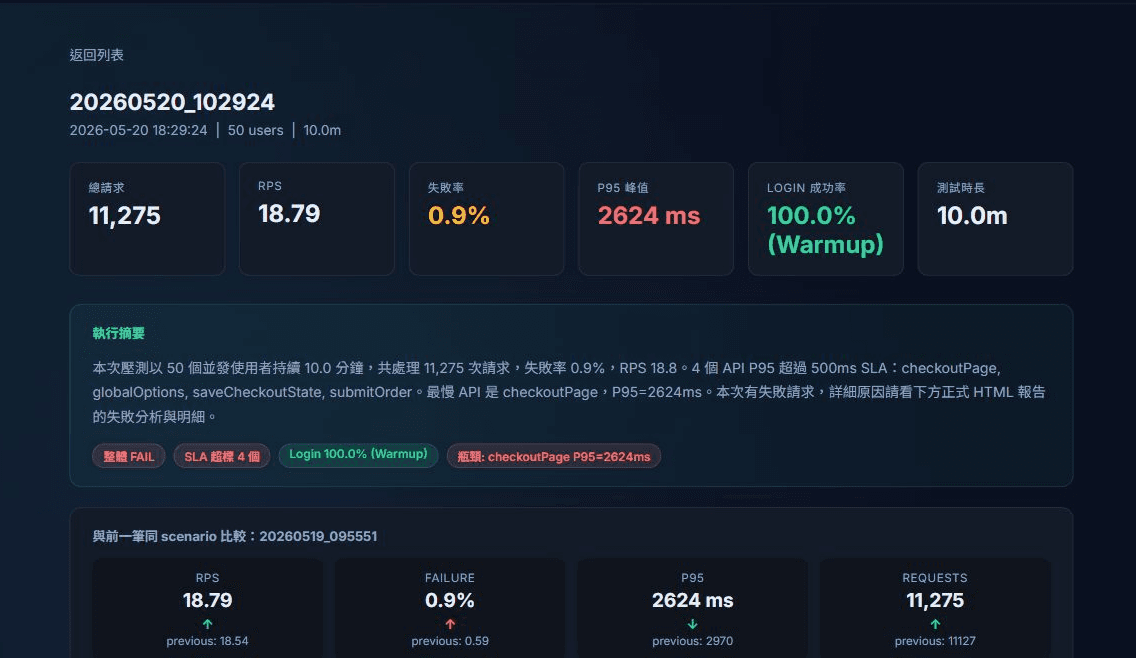
A `502` that only surfaced under saturated connections — now a `3-min` stress deploy plus `10-min` reproduction, straight into the dev loop.
Eighteen clients, eighteen back-offices
Vaxal carries development, management, and consulting for 18 e-commerce clients at the same time. Every back-office looks different — a different ERP, a different CRM, a different payment cadence, a different promotion calendar. Their engineers switched between 18 mental models a day. Every switch carried a long tail of domain context.
Before the integration, every client's ops lived in its own scripts, its own Dashboard, its own runbook. Tracking down a problem meant first figuring out which client, which config, which workflow. Localizing the bug took longer than fixing it.
Turning unreproducible bugs into reproducible ones
The 502 was the archetype. It didn't fire on a specific API under a specific condition — it fired on any request once connections hit the ceiling. To investigate, you had to wait for it to surface on its own. Wait for the next peak. Wait for the next campaign. Wait for luck.
Fantesty Pro flipped that. Three minutes to spin up a stress environment tuned to a specific condition. Ten minutes to run it and reproduce that connection-saturated 502 on demand. A bug that used to be waited on became a bug you could edit-and-test against — straight in the development loop.
Four capability layers, one chat window
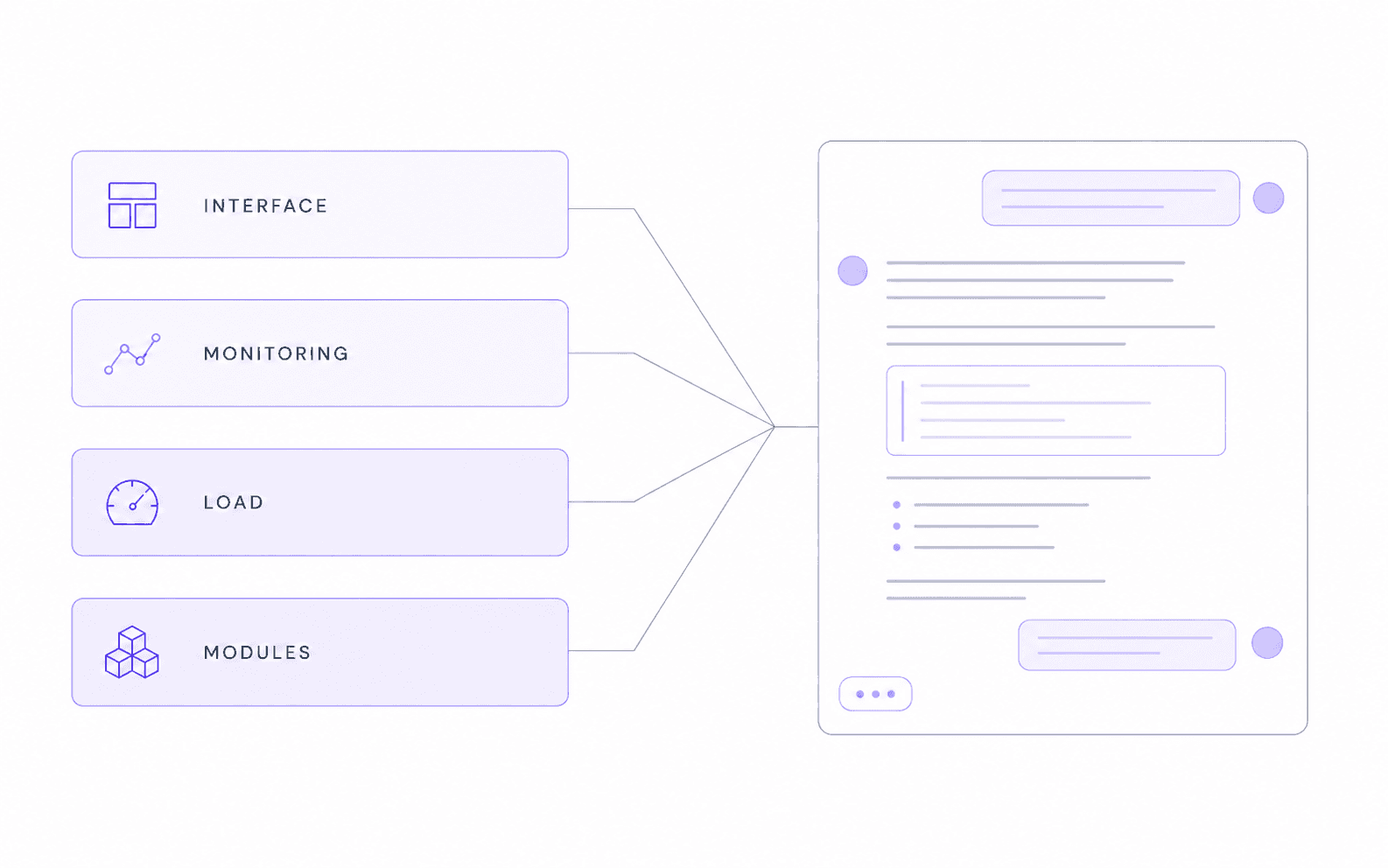
Fantesty Pro wasn't a single tool. It was four things stacked: a unified Dashboard plus workflow orchestration, process monitoring, a high-intensity stress environment, and MCP × Skill per-client modularization. The first three shipped in parallel and wired into Ryko. The fourth made one client = one module the unit of work.
What Vaxal ended up with wasn't four standalone tools. It was one chat interface — backed by 35 client modules, any combination of workflow, and a single end-to-end path from bug report to rolling release.
`Dashboard` + flow orchestration
A unified `Dashboard` view, plus a shared workflow orchestration spine across all clients.
Process monitoring
Live observation of critical processes, `webhooks`, and queue state in every managed environment.
High-intensity stress environment
Three-minute deploy. Ten-minute reproduction. Bugs that used to be 'wait-only' became 'on-demand'.
`MCP × Skill` client modularization
`MCP × 14` + `Skill × 21` — each client's environment captured as a composable capability unit.
Behind the chat window: 18 clients in production
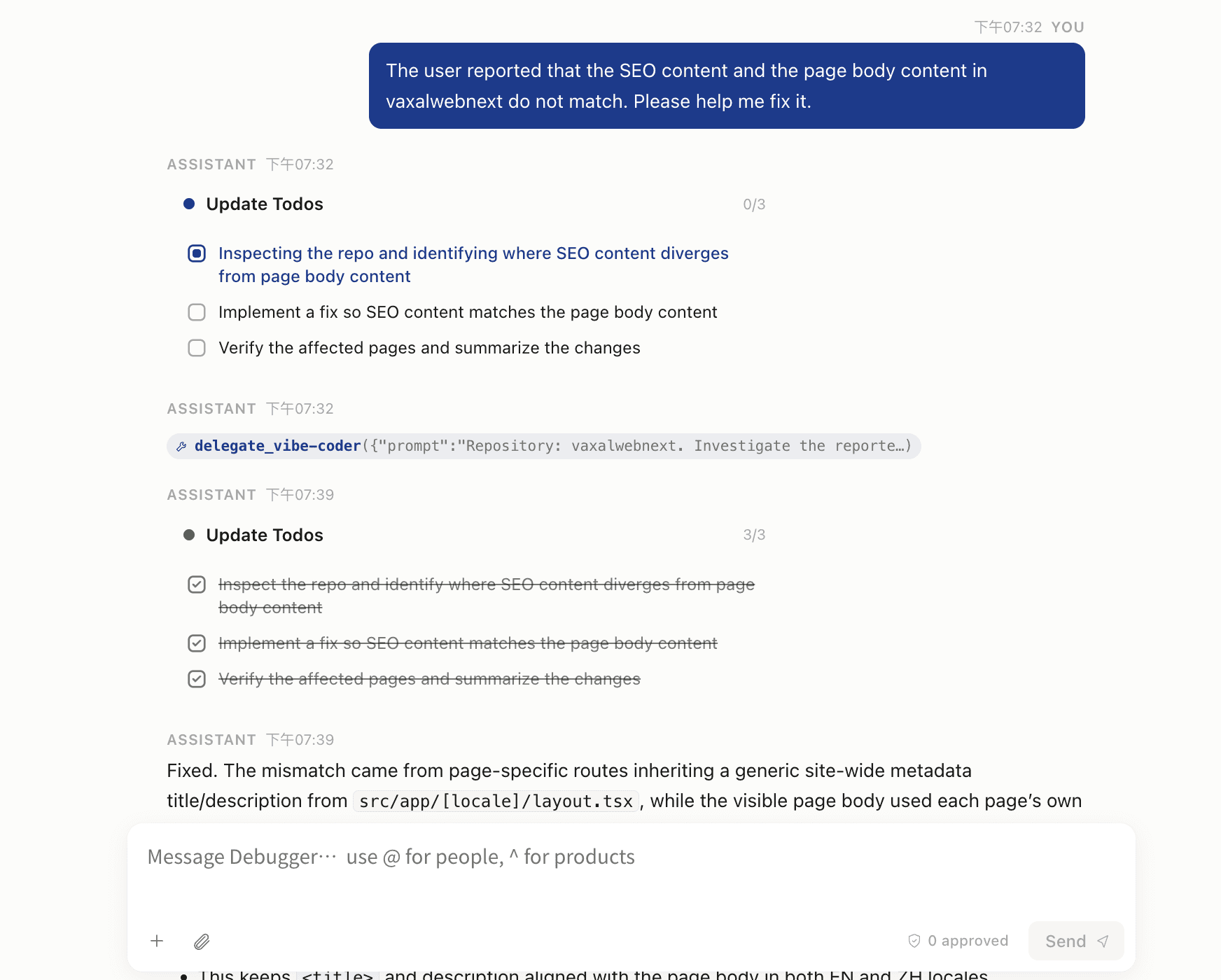
Six months in, the most direct change wasn't on a dashboard. It was the shape of the work. Engineers stopped opening seven windows. Stopped remembering that one client needed a VPN first, another needed a permission flip. They opened a single chat interface, typed one instruction, and triggered a full workflow.
“From bug report to rolling release — driven from a phone.”
In practice: a client message lands on the commute. From the on-phone chat, a staging environment is brought up on remote infrastructure. The AI copilot highlights the likely impact range. Edit code, kick off a stress run, release, roll out — every step triggered from the same chat, without ever opening a laptop.
In parallel, the cost of context-switching across 18 clients got absorbed into the MCP × Skill modules. The 'wait, which client am I in?' overhead handed itself to module switching. The engineer's attention went back to the problem itself — not to remembering what each client's environment looked like.
Today
Vaxal runs an average of 107 AI-initiated, observable flows every day. Each engineer averages 8 chat conversations a day, each one driving a different workflow. Every night, an automated anomaly digest is waiting in the morning. 35 client modules stay resident. 18 e-commerce operations live in the same chat window.
The chat window is the control plane. The complexity is still there. The cost of handling it isn't.